ICSIP Keynote Speakers
|
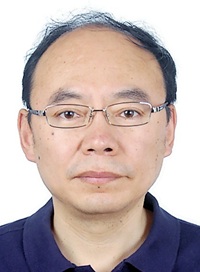
Fellow of IEEE Yong Zeng, IEEE Fellow, young chief professor of Southeast University and Purple Mountain Laboratory, national youth high-level talent, Jiangsu province distinguished young researcher, Clarivate Analytics Highly Cited Researcher for 6 consecutive years (2019-2024), AI2000 Most Influential Scholars in the field of Internet of Things for 4 consecutive years (2021-2024), Stanford "Top 2% of Scientists in the World - Lifetime Influence". Prof. Zeng is the recipient of Australia Research Council (ARC) Discovery Early Career Researcher Award (DECRA), IEEE Communications Society Asia-Pacific Outstanding Young Researcher Award, and won 8 international and domestic best paper awards including IEEE Marconi Award (2020 and 2024), Heinrich Hertz Award (2017 and 2020), etc. Prof. Zeng proposed the concept of channel knowledge map (CKM), and his works have been cited by more than 29,000 times. He serves on the editorial board of SCI journals such as IEEE Transactions on Communications, IEEE Transactions on Mobile Computing, and IEEE Communications Letters, and leading guest editor of journals including IEEE ComMag, Wireless ComMag, China Communications, and Science China Information Sciences. Prof. Zeng was elevated to IEEE Fellow“for contributions to unmanned aerial vehicle communications and wireless power transfer”. Speech Title: NLoS Localization and Sensing in Complex Low-Altitude Environment with CKM Abstract: Traditional wireless systems primarily follow an "environment-unaware" paradigm, failing to effectively leverage prior knowledge of the local wireless environment. This results in low efficiency for both environmental sensing and channel acquisition, making it difficult to meet the growing performance demands of future wireless communication, sensing, and localization tasks. As a highly promising solution, the Channel Knowledge Map (CKM) has emerged. By fusing massive historical data accumulated from all terminals within a region, CKM learns the intrinsic characteristics of the local propagation environment and constructs a fundamental knowledge representation. Consequently, it allows for the direct acquisition of wireless channel priors solely based on (virtual) terminal location information. This report focuses on Intelligent CKM-Enabled NLoS (Non-Line-of-Sight) Sensing and Localization in Complex Low-Altitude Environments, aiming to address the challenges of sensing and localization when Line-of-Sight (LoS) links are blocked. The presentation will first introduce the principles and intelligent construction methods of CKM, and then elaborate on how a CKM built for communication can be repurposed for sensing and localization, there by achieving a "kill two birds with one stone" dual benefit. |
|
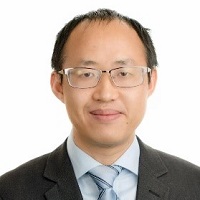
Fellow of IEEE Guan Gui (Fellow, IEEE) received his Ph.D. degree from the University of Electronic Science and Technology of China, Chengdu, China, in 2012. From 2009 to 2014, he was a research assistant and postdoctoral research fellow at Tohoku University, Japan. From 2014 to 2015, he was an Assistant Professor at Akita Prefectural University in Japan. Since 2015, he has been a Professor at Nanjing University of Posts and Telecommunications, China. His research focuses on intelligent sensing and recognition, intelligent signal processing, and physical layer security. Dr. Gui has authored over 200 IEEE journal and conference papers and received several best paper awards, including at ICC 2017, ICC 2014, and VTC 2014-Spring. He is a fellow of IEEE, IET, and AAIA, and he is recognized for his contributions to intelligent signal analysis and wireless resource optimization. Among his accolades, he received the IEEE Communications Society Heinrich Hertz Award in 2021 and was named a Clarivate Analytics Highly Cited Researcher from 2021 to 2024. Dr. Gui is a Distinguished Lecturer for the IEEE Vehicular Technology Society (VTS) and the IEEE Communications Society (ComSoc). He is an editorial board member for several leading journals, including the IEEE Transactions on Information Forensics and Security, IEEE Internet of Things Journal, and IEEE Transactions on Vehicular Technology. Additionally, he serves as the Editor-in-Chief of KSII Transactions on Internet and Information Systems. He has also held prominent roles in international conferences, such as Executive Chair of IEEE ICCT 2023, Executive Chair of VTC 2021-Fall, and Vice Chair of WCNC 2021. Speech Title: High-Reliability Communication Unmanned Swarm Agents for Low-Altitude Intelligent Connectivity: Prototype System Design and Verification Abstract: Aiming at the bottlenecks of unstable communication links, poor coordination consistency and weak task fault tolerance of unmanned swarms caused by urban airspace occlusion, time-varying electromagnetic interference and Doppler fading from high-speed maneuvering in low-altitude intelligent connectivity scenarios, this paper carries out the design and verification of a high-reliability communication unmanned swarm agent prototype system to meet the demands of large-scale low-altitude unmanned operations. Relying on the integrated communication-sensing-intelligence network infrastructure for low-altitude airspace, a hierarchical cloud-edge-end collaborative architecture for unmanned swarm agents is constructed by combining multi-agent autonomous coordination mechanisms and distributed anti-interference networking technologies. By adopting adaptive dynamic topology networking, intelligent game-based optimization of spectrum resources, self-healing reconstruction of faulty communication links and real-time situation synchronization based on digital twins, the closed-loop coupling of low-altitude environmental perception, reliable transmission, intelligent decision-making and formation control is realized. The proposed scheme effectively addresses critical challenges including link disconnection failure, delay jitter and coordination loss of swarms under complex dynamic low-altitude conditions. Functional verification and performance tests of the prototype system are implemented via simulation platforms and typical low-altitude service scenarios. Experimental results demonstrate that the system possesses prominent advantages such as strong anti-interference capability, high link connectivity, rapid topological reconstruction and stable coordination performance. It can support large-scale swarm missions including low-altitude inspection, airspace security and low-altitude logistics, and provide feasible prototype schemes and technical references for the engineering deployment of low-altitude intelligent connected unmanned systems. |
|
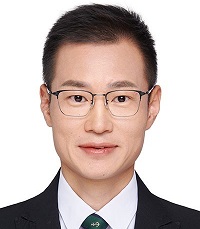
Prof. Jie Yang, Shanghai Jiao Tong University, China Jie Yang received a bachelor’s degree in Automatic Control in Shanghai Jiao Tong University (SJTU), where a master’s degree in Pattern Recognition & Intelligent System was achieved three years later. In 1994, he received Ph.D. at Department of Computer Science, University of Hamburg, Germany. Now he is the Professor and Director of Institute of Image Processing and Pattern recognition in Shanghai Jiao Tong University. He is the principal investigator of more than 30 national and ministry scientific research projects in image processing, pattern recognition, data mining, and artificial intelligence. He has published six books,more than five hundreds of articles in national or international academic journals and conferences. Google citation over 29000,H-index 89. Up to now, he has supervised 5 postdoctoral, 46 doctors and 70 masters, awarded six research achievement prizes from ministry of Education, China and Shanghai municipality. He has owned 48 patents. Three Ph.D. dissertation he supervised was evaluated as “National Best Ph.D. Dissertation” in 2009, in 2017, in 2019. He has been chairman and keynote speaker of more than 10 international conferences. Speech Title: Researches on the Defenses and Out-of-distribution Detection in Trustworthy Deep Learning Abstract:The rapid advancement of deep learning has had a transformative effect on the development of technology and society across a multitude of sectors. In safety-critical contexts, the potential for neural network models to produce unreliable outputs in response to “malicious” or “unanticipated” inputs poses a severe risk. This talk delves into the output reliability from neural network models within the domain of trustworthy deep learning. 1) inputs that involve pixel perturbations, exemplified by adversarial examples,w.r.t the task of adversarial and certified robustness; 2) inputs that represent distribution shifts, exemplified by Out-of-Distribution (OoD) data, w.r.t the task of out-of-distribution detection. We introduce a novel strategy of model augmentation, adopt a multi-head neural network structure, and pose diversity constraints related to adversarial robustness into the model parameters.We adopt a multi-head neural network structure, use the ensemble of multiple heads in place of the ensemble of multiple neural networks,which significantly reduces the computational load in both training and certification phases. We propose that the non-linearity in InD and OoD data hinders PCA from learning a subspace that fully embodies their diversities. We propose a mode ensemble method that not only enhances detection performance but also significantly reduces the performance variance among independent modes.We propose performing linear dimension reduction on the gradient using a designated subspace that comprises principal components.
|